
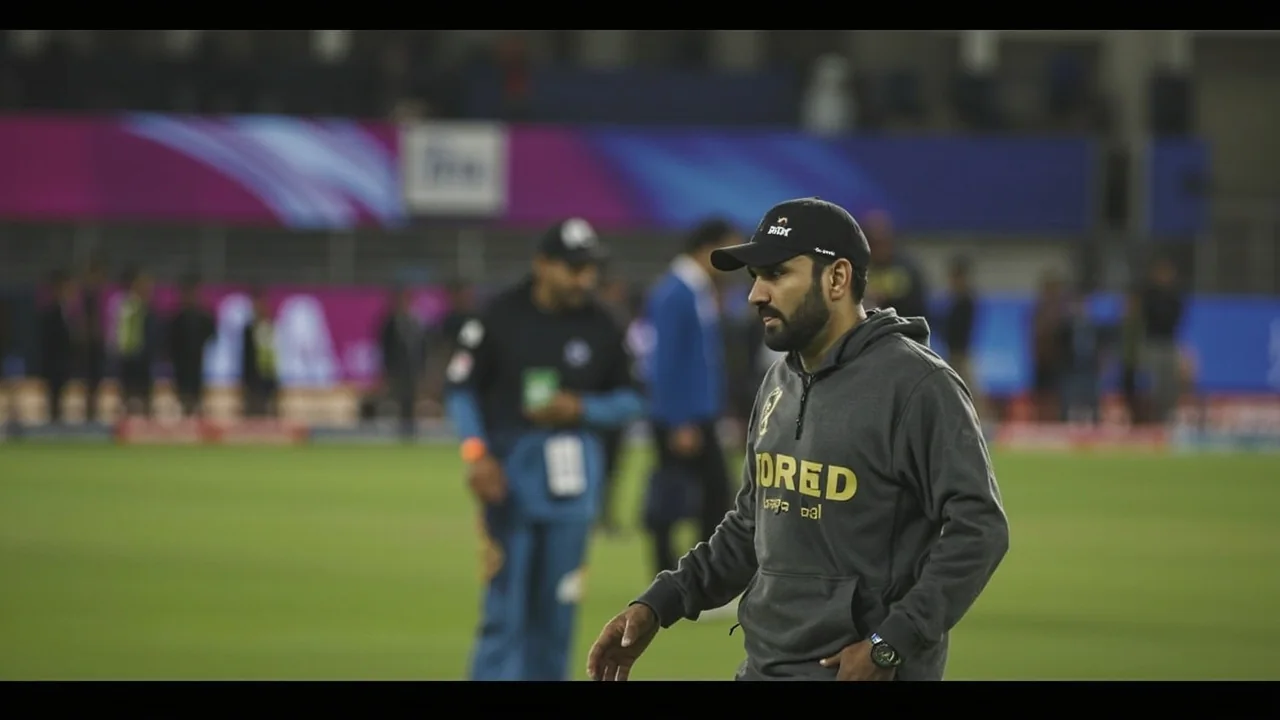
The 16 April fixture was scheduled against a Punjab Kings side that had moved into second place on the table before Wednesday's games and was still unbeaten in IPL 2026 — a run of form that placed the contrast with Mumbai Indians in sharp relief. MI sat second from bottom. The two franchises had last met in the second Qualifier of the previous season, and their results had travelled in opposite directions since. The Rohit question was, on paper, only one of several selection knots, but it sat at the centre of every tactical conversation around the XI sheet.
Rohit's RCB innings had ended early. He retired hurt on 19 off 13 deliveries with what appeared to be a hamstring complaint, and then arrived late for the MI training session on Wednesday evening. The session that followed was light — warm-ups, some jogging, a short net — none of the high-intensity batting markers the medical staff usually want from a returning player. By the time the squad reconvened on Thursday morning, his availability for the PBKS match remained unconfirmed. There was no public replacement named, only a list of conditional picks that depended on which overseas option Mumbai was willing to leave out.
That conditional list is the centre of gravity. Three different opener replacements sit inside it, and they each come with a different overseas-cost trade-off. Reading them together — Quinton de Kock, Danish Malewar, and Robin Minz — gives a complete picture of how Mahela Jayawardene was balancing the top of the order, the overseas quota, and the bowling depth ahead of an unbeaten opposition.
The first option: bring Quinton de Kock in as opener
The cleanest replacement on paper was Quinton de Kock. Slot him in at the top of the order, and the batting shape stays largely intact — left-right combination, an aggressive powerplay option, a wicketkeeper-batter who has scored heavily in this league. The complication is not the bat. It is the bowling card.
If de Kock plays, Mumbai Indians would need to leave out one of their three overseas players — Sherfane Rutherford, Mitchell Santner, or Trent Boult. None of those three is a straightforward sacrifice. Rutherford brings left-handed middle-order hitting and a useful pace-bowling cameo. Santner is the only frontline specialist spinner in the squad. And Boult is the left-arm seam option that holds the new ball and the powerplay wickets.
For that reason, de Kock's inclusion is really a question about how the rest of the XI is valued. If the management reads the PBKS surface as a pace-friendly deck where wickets in the powerplay are decisive, Boult becomes the hardest to drop — and Santner or Rutherford takes the overseas hit. If the surface is slower and spin is expected to dominate the middle overs, Santner becomes the protected player, and the call moves to Boult or Rutherford. De Kock is the constant; the variable is the bowler the team is willing to lose to fit him in.

The second option: keep the three overseas players and promote an Indian
The cleaner overseas route is to retain Rutherford, Santner, and Boult, and promote an Indian opener in Rohit's place. Two names were in that conversation. The first was Danish Malewar, the Vidarbha opener who has been on the fringes of the squad through the early IPL 2026 fixtures. The second was Robin Minz, whose role inside the MI set-up is usually wicketkeeper-batter, but who has opened in domestic white-ball cricket and offers a left-handed option.
Either choice means the batting order shifts around but the bowling card is untouched. Hardik Pandya keeps the all-rounder slot. Santner keeps the spinner. Boult keeps the new ball. The cost is on the bat: Malewar is a less proven IPL quantity than de Kock, and Minz has had limited middle-stage exposure at this level. But the trade-off buys bowling balance — and balance, given MI's economy numbers at that point of the season, was the more valuable currency.
For fantasy readers tracking the implication, the practical read is straightforward. An Indian-promotion XI opens the door to a cheaper uncapped-credit differential pick, but the batting ceiling drops by 8-12 fantasy points per match until the new opener settles. A de Kock XI keeps the batting ceiling intact but forces a sacrifice from one of three proven overseas matchups. Both are defensible calls — they just optimise for different risks.
The third option: change the bowling attack and slot de Kock in
There is a third path that was being weighed alongside the first two: reshuffle the bowling attack to keep de Kock in the XI without losing the three overseas players. The mechanism is to drop Trent Boult and bring in Ashwani Kumar, the Indian left-arm seamer, alongside de Kock. That would still require an overseas exit somewhere, but it shifts the conversation from "who do we leave out at the top" to "how do we replace the wicket-taking threat of Boult on Indian-pace terms."
The argument against this move is the same argument that has followed MI through the first half of IPL 2026: Jasprit Bumrah is yet to take a wicket in the season, and dropping Boult on top of that drought would leave the attack looking unusually thin at the wickets column. The argument in favour is that PBKS is an unbeaten side with aggressive top-order batters, and the Mumbai think-tank may have read the matchup as a chase scenario in which Boult's early overs matter more than the death overs he usually owns. Ashwani's lengths against right-handers in the powerplay, if used in place of Boult, are a viable short-burst swap — and they free the overseas slot for de Kock.
Read this third path as a contingent call rather than the base case. It is the option Mumbai reaches for if the pitch reads flat, if the toss looks likely to be a chase, and if Bumrah's form is read as a passing slump rather than a structural problem. If those three conditions do not all hold, the simpler overseas trade is more likely to be the one Mahela Jayawardene makes on the morning of the game.
What the MI numbers said about the bowling picture
Independent of the Rohit question, Mumbai Indians' bowling numbers from the opening stretch of IPL 2026 explained why this selection felt so heavy. The franchise carried the highest economy rate in the competition at 11.3, with a bowling average of 55.00 — both numbers sitting well above the rest of the league. Delhi Capitals were the next-closest on the bowling average at 35.60, which gave a sense of how wide the gap between MI and the next-worst attack had become.
The middle-overs split was even more pointed. Mumbai had been the most expensive team between overs 7 and 15, conceding at 11.08 runs per over. Chennai Super Kings, the next team on that middle-over list, sat at 9.85 — more than a run better than MI. Across the competition's middle phase, that one-run gap compounds quickly. Over ten middle overs it adds up to ten runs conceded, and ten runs in a tight IPL chase often separates a winning total from a losing one.
Those numbers explain why dropping Boult — even for a left-arm Indian replacement in Ashwani Kumar — was a discussion rather than an automatic move. They also explain why Santner's retention mattered even when the surface looked batter-friendly: taking spin out of the middle overs to make room for an extra batter would have widened the middle-overs economy gap rather than closed it.
The PBKS form backdrop
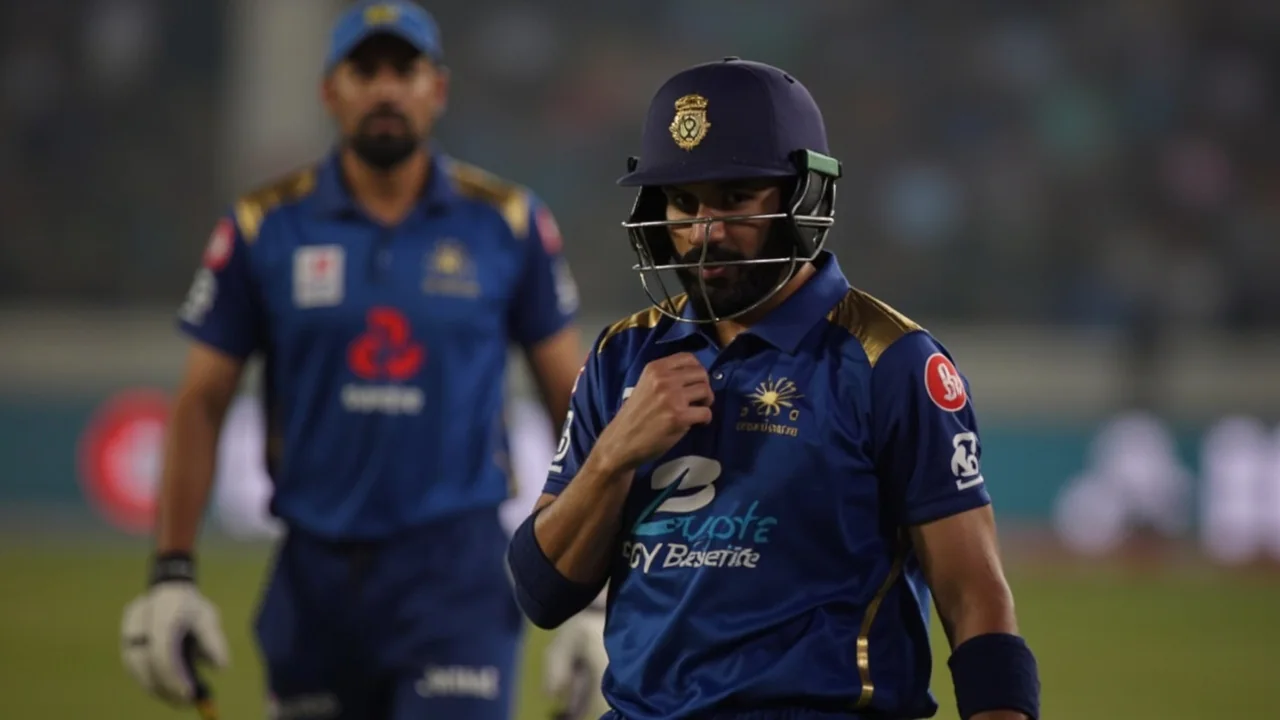
While MI were working through the Rohit question, Punjab Kings were simply continuing to win. They had moved into second place on the table before Wednesday's round of games and had not lost a fixture in IPL 2026. Their batting depth through the middle order had been the talking point of the early season, and their overseas top three had been consistently productive enough to keep the pressure off the Indian batting card.
For Mumbai, the contrast was uncomfortable. MI sat second from bottom, four points off the playoff pace and a bowling attack that was conceding runs at a rate no other franchise in the league was matching. The RCB game had compounded that picture — not because of the result, but because the only major batter in the XI had walked off the field before the innings ended. A replacement that preserved the bowling card was, on balance, more aligned with where PBKS were most likely to hurt MI than a replacement that preserved the batting card.
That reading does not close the de Kock debate. It just sets the weight of the trade-off: a batting-first choice asks PBKS to outscore Mumbai on a flat deck, which the unbeaten side has shown they can do; a bowling-first choice asks the same MI attack that is conceding at 11.3 to find a wicket-taking gear it has not located yet. Neither option is comfortable, but only one keeps the bowling math intact.
Will Jacks and the still-pending overseas slot
One additional thread was running underneath the opener conversation. Will Jacks, the English all-rounder who would otherwise be a candidate for the overseas slot, was not yet available — he was still on his way to India. That narrowed the overseas-options conversation to the three players already in the country: Rutherford, Santner, Boult, with de Kock as the would-be fourth.
Jacks's absence meant there was no fifth-option cushion if one of the three currently in India picked up a niggle, picked up a suspension, or was simply rested. The four-overseas-player pool that MI were working with on Thursday morning was the pool they would have for the rest of the fixture. Every trade-off had to be evaluated against the recognition that the squad depth beyond these names was, for this match, thinner than the squad sheet normally suggested.
Selection threads that would resolve only at the toss
By the time the team sheet landed, several threads would either close or stay open. Did Rohit pass the late fitness test and keep his place? If yes, the question dissolves and MI play their preferred top order. If no, the de Kock-or-promote question moves to the top of the agenda.
Which overseas player leaves if de Kock comes in? The answer depends on how the management reads the PBKS top order. A left-heavy Punjab batting card shifts the sacrifice towards Rutherford or Santner. A right-heavy card with one or two left-handed pinch-hitters shifts it towards Boult.
Is the Ashwani Kumar path active? Only if the toss outcome and the morning pitch read both point to a chase scenario in which the new ball is the decisive phase and the death overs can be handled by the remaining pace options plus Santner. That is a more specific reading than the simple "fit de Kock" call.
How many overs are earmarked for Santner on a deck that has historically rewarded spin through the middle? If the answer is four full overs, Santner is locked. If the answer is two or three, the calculus shifts and one of the seam-bowling all-rounders can absorb his quota without an overseas sacrifice.
What the PBKS counter-plan asked of MI
Punjab's unbeaten run had been built on aggressive powerplay scoring and tight death bowling — both of which would test an MI XI that is struggling on both phases. The early wicket-taking threat, particularly against a top order that takes risks, was always going to be more valuable than the late-overs containment option, especially if the toss produced a flat chase deck. That tilted the read of the morning towards Boult-on-powerplay rather than Boult-on-death, which in turn tilted the overseas choice if de Kock was selected.
Mumbai's bowling plan against PBKS therefore had a structural shape regardless of who opened: attack early with whatever combination of Bumrah, Boult, and the all-rounders remained after the overseas selection, squeeze spin through Santner in the middle overs, and accept that the death phase might leak unless one of the Indian seamers produced an unusually accurate spell. That shape did not change whether the opener was de Kock, Malewar, or Minz — but the personnel available to execute it did, and that is what made the Rohit question so consequential.
Why the answer mattered beyond this one fixture
The 16 April fixture sat at the front end of a stretch in which MI's margin for error was already narrow. A second straight loss would have put the franchise five or six points off the top four, depending on the other results that evening, and the bowler-share conversation that followed would have shaped selections for the next two or three games. The choice of opener on Thursday was not just a choice for the PBKS match; it was the first move in a sequence of choices that would define the rest of April.
For fantasy readers building teams across this MI window, the implication was that the bowling card was the more stable variable and the batting card was the more variable one. Captain picks should have leaned towards bowlers in matches where the surface allowed the MI pace attack to find early swing, and towards the more proven batters in matches where the deck flattened. Rohit's absence made the batting picks less certain than usual, but it did not change the fact that the bowling unit, however stretched, remained the more reliable fantasy-points source.
Key facts at a glance
| Item | Detail |
|---|---|
| Match | Mumbai Indians vs Punjab Kings, IPL 2026 league fixture |
| Original report date | Thursday, 16 April 2026, 12:23 IST |
| Rohit Sharma status | Retired hurt 19 off 13 vs RCB; late Wednesday warm-up only; PBKS availability unconfirmed |
| Replacement option A | Quinton de Kock as opener; one of Rutherford, Santner, or Boult to be left out |
| Replacement option B | Promote Danish Malewar or Robin Minz; keep all three overseas players |
| Replacement option C | Drop Boult for Ashwani Kumar; bring de Kock into the XI |
| Will Jacks | Unavailable — still travelling to India |
| MI bowling economy | 11.3 (highest in IPL 2026); bowling average 55.00 (next: Delhi Capitals 35.60) |
| MI middle-overs economy | 11.08 (most expensive); Chennai Super Kings next at 9.85 |
| Jasprit Bumrah | Yet to take a wicket in IPL 2026 at the time of the report |
| Table position | PBKS second, unbeaten; MI second from bottom |
The Rohit call, the overseas trade, and the bowling-share choice were three faces of the same decision. By the time the XI sheet landed on Thursday, only one of them would be visible. Until then, the conditional map above was the cleanest read of how Mahela Jayawardene and the MI back-room were balancing bat, ball, and bench strength against an unbeaten opposition.
The next data point in this story is the actual team sheet — and the first over of the PBKS innings, which will tell readers whether the MI attack was built around an early swing threat, a middle-overs squeeze, or a death-overs gamble. Each of those plans corresponds to a different answer to the Rohit question, and each will define how the rest of April reads for fantasy users following the franchise.