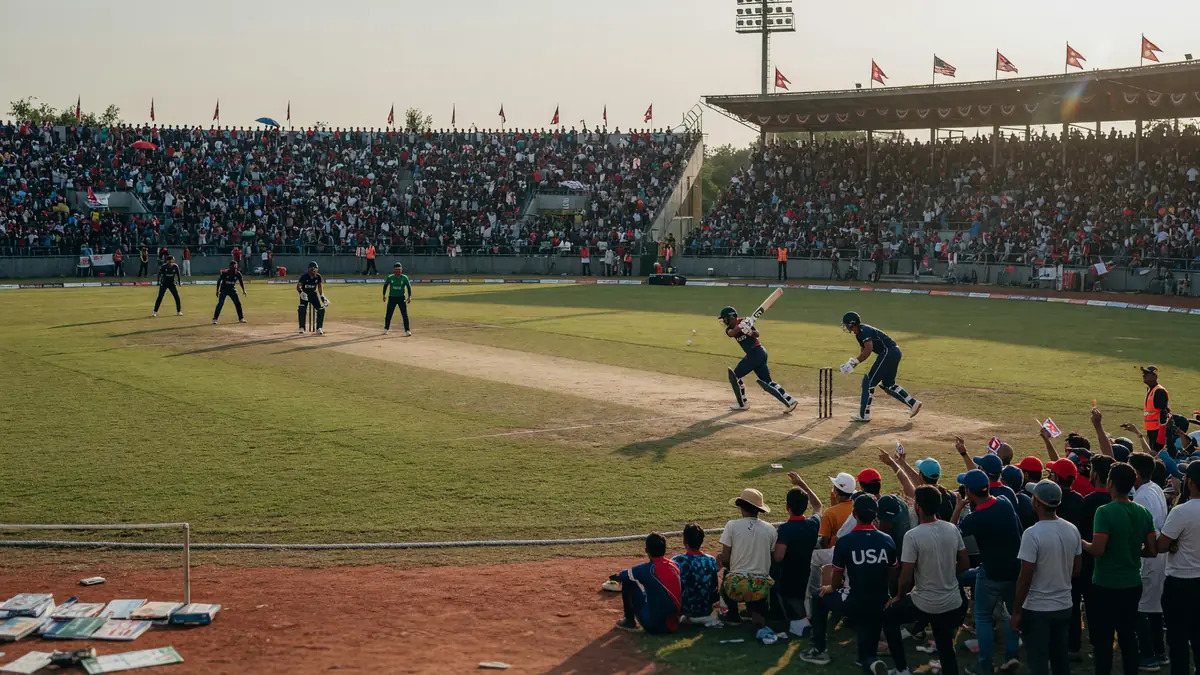
Match 109 was scheduled for Friday, 22 May 2026, with a 9:15 AM IST start. It closed Nepal’s home leg in the tri-series stretch that also involved the United States. The preview, written by Vicky Singh and first published on the evening of 21 May 2026, treated the contest as a short-turn fantasy problem: one more game on a familiar Kirtipur strip, against an opponent Nepal had already dismantled on the same ground earlier in the tournament.
That earlier meeting still frames the whole brief. Nepal had bowled first, dismissed the United States for 195, and won by nine wickets. Dipendra Singh Airee’s 4/24 sat at the centre of the bowling card, while Smit Patel’s 83 and Shehan Jayasuriya’s 50 were the main USA batting returns. Nepal’s chase then ran through Kushal Bhurtel’s unbeaten 120 off 118 balls and Aasif Sheikh’s 58. For anyone building a fantasy side the next day, those names were not abstract history — they were the last complete sample on the same venue.
Head-to-head across the wider sample still favoured the United States slightly, at six wins to Nepal’s five. The preview still leaned toward a USA win when it looked at the points table. Fantasy value, though, rarely follows table position alone. Kirtipur’s recent evidence pointed toward Nepal’s multi-skill core and the United States’ need to fix a top-order collapse that had already cost them once on the tour.
Fixture facts that still matter for fantasy builds
The core logistics were clean. Nepal versus United States of America, ICC Men’s Cricket World Cup League 2 ODI 2026, Match 109, Friday 22 May 2026, 9:15 AM IST, Tribhuvan University International Cricket Ground, Kirtipur. Weather notes attached to the preview put the morning near 22°C under a clear sky — a full-game window rather than a rain-truncated toss lottery.
Pitch language in the same brief was more specific. The surface was described as batting-friendly overall, yet better for pace than for pure spin accumulation. Average first-innings score sat around 250. Chasing sides were winning only 39% of the time in the sample used for the preview. Those three numbers still form a useful ODI template: first-innings batters who bat deep, new-ball bowlers who can force early mistakes, and all-rounders who can contribute if the middle overs slow after a powerplay surge.
For salary-cap games, that template changes role weight more than brand names. A keeper-batter who sees 40-plus balls at the top becomes more attractive than a pure finisher. A seamer with a fixed new-ball share often outpoints a third spinner if the surface truly helps pace. An all-rounder who bowls full overs and bats in the top six becomes the natural captaincy conversation, especially when the same player already owns a four-wicket haul on the ground.
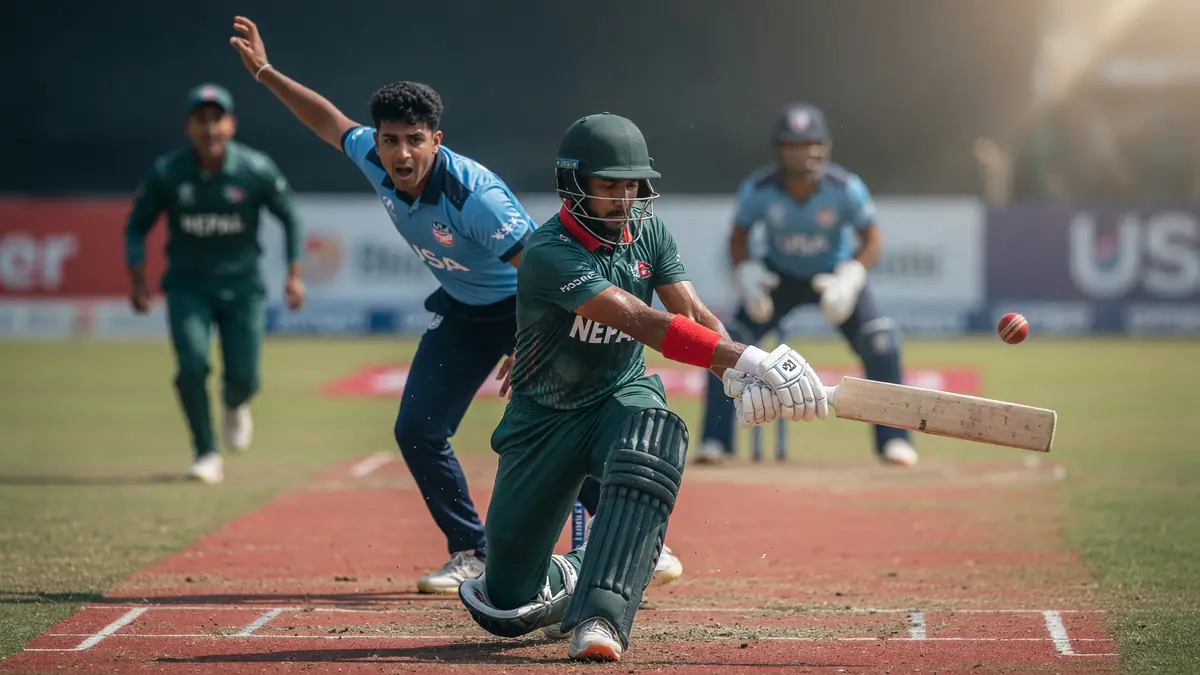
What the previous Kirtipur meeting told fantasy managers
The prior result was the single strongest data point in the 21 May preview. United States 195 all out; Nepal home by nine wickets. That is not a narrow toss-flip contest. It is a game in which one bowling unit dictated length early and one batting pair never let the chase tighten.
Airee’s 4/24 remains the headline bowling return. In League 2 terms he already carried a heavy dual-role ledger — 677 runs in 23 tournament games in the numbers attached to the preview — so the four-for was not a random spike from a pure bowler. Fantasy sides that underweighted him after treating him only as a middle-order batter missed the full ceiling.
On the USA card, Smit Patel’s 83 and Jayasuriya’s 50 showed that the visitors could still post individual half-century scores even in a sub-200 total. The failure was collective rather than total absence of batting. That distinction matters when you rebuild a side for the return fixture: you do not automatically drop every USA batter; you ask which of them still owns a stable role and which of them is exposed if the top order loses two wickets inside the first 15 overs again.
Nepal’s chase structure was simpler. Bhurtel’s unbeaten 120 off 118 and Aasif Sheikh’s 58 removed any chase anxiety. In fantasy language, that is long occupancy plus a second top-order contributor. If the pitch remained true the next morning, repeating that pattern was a live possibility whenever Nepal batted second — even though the broader venue sample said chasing sides won only 39% of the time.
Captaincy and vice-captaincy reads from the May brief
The preview’s hot captaincy names were clear. Harmeet Singh, the USA spinner, entered with 31 wickets in 22 ODIs at an economy of 4.25. Dipendra Singh Airee sat on the Nepal side of the same conversation because of that dual-role volume. Neither pick was a novelty differential invented for click traffic; both had tournament-level evidence.
Sandeep Lamichhane’s League 2 body of work was even larger: 97 wickets in 47 tournament matches. On a surface labelled better for pace, pure spin accumulation can cool a little, yet Lamichhane’s wicket-taking rate still kept him in every serious bowling stack. The practical fantasy question was not whether he belonged in the XI, but whether he belonged in the C/VC band if the toss and early movement pointed toward seam.
Among batters, Monank Patel’s tournament ledger stood out on the USA side: 854 runs in 25 League 2 matches with eight fifties, while also carrying the captain-wicketkeeper role. Rohit Kumar Paudel, Nepal’s captain, arrived with a recent match-winning unbeaten 74 against Scotland in the same tri-series window. Captaincy premiums in fantasy are not automatic just because a player wears the armband, but both men combined leadership with proven middle-order or top-order scoring, which is the combination that usually survives a short preview cycle.
If you strip the May brief down to a locking order, it looked roughly like this: lock Airee for dual-role ceiling; lock one of Lamichhane or Harmeet depending on expected spin overs; lock one of Bhurtel or Monank Patel for long batting occupancy; then fill the remaining credits around new-ball seam and a second all-rounder. That order still works as a checklist for similar Associate ODIs on home surfaces with a recent one-sided result.
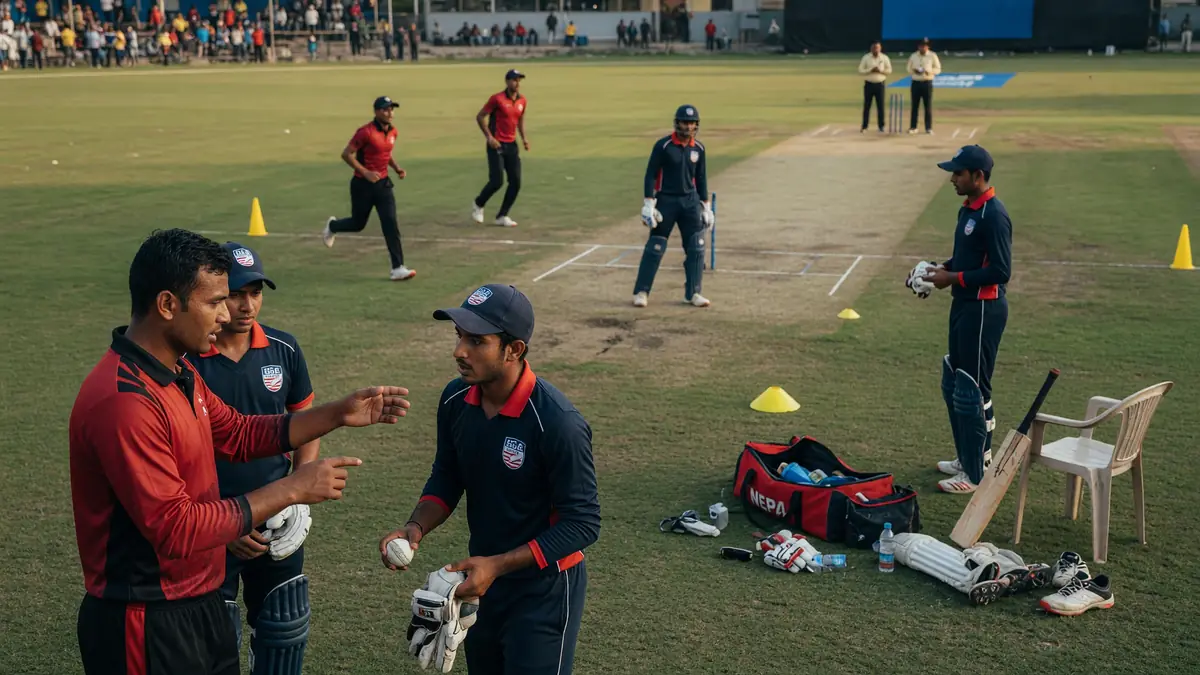
Predicted XIs and where the value usually hid
The preview’s predicted Nepal XI read: Aasif Sheikh (wk), Kushal Bhurtel, Bhim Sharki, Rohit Paudel (c), Aarif Sheikh, Dipendra Singh Airee, Gulshan Jha, Sompal Kami, Karan KC, Sandeep Lamichhane and Lalit Rajbanshi. That is a classic home ODI balance — double batting depth through the Sheikh names, two seam-hitting all-round options in Jha and the lower order, and a spin pair anchored by Lamichhane and Rajbanshi.
The predicted USA XI was: Smit Patel, Monank Patel (c & wk), Andries Gous, Saiteja Mukkamalla, Milind Kumar, Shayan Jahangir, Harmeet Singh, Shubham Ranjane, Jasdeep Singh, Saurabh Netravalkar and Juanoy Drysdale. The batting spine ran through Smit Patel, Monank Patel and Gous. The bowling spine ran through Netravalkar’s left-arm control, Jasdeep Singh’s seam, Drysdale’s pace, and Harmeet’s spin. Milind Kumar and Ranjane were the bridge roles that often decide whether a USA fantasy build has enough all-round coverage.
Value usually hid in the bridge roles, not the marquee names. Gulshan Jha and Karan KC could swing a Nepal side if they bowled full overs and still batted. On the USA side, Ranjane or Milind Kumar could do the same if the top order failed again and the middle had to both score and bowl. Fantasy managers who only stacked the previous match’s centurion and the highest-owned spinner often ended up with correlated teams and no unique path if the game script flipped.
Injury language in the public preview was thin; no major late scratch dominated the 21 May write-up. That absence is itself a note for retrospective reading. When a preview does not flag a confirmed withdrawal, the correct move is not to invent one. It is to treat the predicted XI as a pre-toss baseline and leave final locks until the official sheet, especially for Associate fixtures where XI churn can still arrive late.
Pitch, toss and first-innings bias at Kirtipur
The 250 average first-innings mark and the 39% chase-win rate together create a mild bat-first bias. They do not create a hard rule. Nepal’s previous nine-wicket chase on the same ground proved that a strong home batting pair can ignore the broader sample when the total is only 195. Fantasy process has to hold both facts at once: prefer first-innings volume when the toss is unknown, but do not discard proven Kirtipur chasers if Nepal bowl first again.
Pace-friendly language also changes bowling order. Sompal Kami, Karan KC, Netravalkar, Jasdeep Singh and Drysdale all gain relative to a pure dry-turn script. Lamichhane and Harmeet remain essential because ODI middle overs still need control, yet the new-ball share becomes the cleaner path to bonus points if early moisture or grass helps seam.
Weather near 22°C with a clear sky removed one common Associate-match complication: reduced overs. Full 100-over contests reward players who stay alive deep into an innings. That is another reason the May brief kept returning to Bhurtel, Monank Patel and Airee rather than pure cameo hitters. In a rain-split game those names can still work; in a full ODI they become the default frame of the team.
How the points-table lean interacted with form
Based on the points table, the preview expected the United States to win Match 109. That lean sat beside a head-to-head edge of 6–5 for the USA and beside a very recent nine-wicket defeat on the same ground. The tension between table position and last-game evidence is exactly where fantasy sides diverge from fan narrative.
A table-led build would overweight USA batting stability and Netravalkar’s control. A form-led build would overweight Nepal’s bowling cluster and Bhurtel’s occupancy. The more balanced approach in May was to keep 6–5 or 7–4 splits rather than 9–2 stacks, then use captaincy to express the stronger script. If you trusted the prior Kirtipur result, Airee or Bhurtel carried the C/VC. If you trusted the table lean and USA’s broader League 2 batting depth, Monank Patel or Harmeet made more sense.
Neither approach required inventing extra storylines. The verified ledger already supplied enough contrast: Nepal’s home bowling punch, USA’s need to repair a sub-200 total, and a venue profile that still quietly rewarded first-innings batting volume.
A practical checklist drawn from the 21 May notes
First, fix the venue script before the player script. Kirtipur, batting-friendly but pace-assisted, average first innings near 250, chase success only 39% in the cited sample. That single paragraph already tells you to pay for top-order overs and new-ball seam.
Second, honour the last local result without copying it blindly. Airee’s 4/24, Bhurtel’s unbeaten 120, Aasif Sheikh’s 58, Smit Patel’s 83 and Jayasuriya’s 50 are the five performances that still demand a second look. They do not automatically become five mandatory locks if roles change at the toss.
Third, keep the dual-role ladder visible. Airee, Gulshan Jha, Milind Kumar, Ranjane and even Paudel in some game states can score in more than one column. In small-field contests, that ladder is often the difference between a median team and a winning one.
Fourth, treat captaincy as a role decision, not a popularity contest. Harmeet’s 31 wickets at 4.25 economy, Lamichhane’s 97 League 2 wickets, Airee’s 677 tournament runs, Monank Patel’s 854 runs with eight fifties, and Paudel’s recent unbeaten 74 against Scotland are concrete reasons, not vibes.
Fifth, leave room for the official XI. The predicted sides from 21 May were strong baselines, not final truth. Associate ODIs can still move a seamer or a middle-order batter after warm-ups. The managers who wait for confirmation usually lose only a few minutes and protect a full contest entry.
Why this preview still earns a re-read
Retrospective fantasy writing is useful when the original brief contains durable structure rather than disposable hype. The Match 109 preview did. It fixed a date, venue and start time. It recorded a decisive prior result on the same ground. It published concrete tournament tallies for the main captaincy candidates. It described pitch and weather in numbers instead of adjectives alone. And it offered full predicted XIs that still read like coherent ODI balances.
Those pieces remain relevant beyond one Friday morning in May. Any later Nepal home ODI at Kirtipur, or any USA away game against a side with multi-skill depth, can reuse the same questions: who owns the new ball, who bats through the first 30 overs, which all-rounder actually bowls, and whether the last local result outweighs the broader table.
The 21 May 2026 article was later marked with an update stamp on 24 June 2026. That does not convert the preview into live news in August. It simply confirms the piece stayed in circulation as a reference note. Reading it now is an exercise in method, not an attempt to relitigate a completed fixture as if the toss had not yet happened.
Key facts retained from the original preview
The lasting lesson from Match 109’s fantasy preview is methodological. Anchor the build in the last local result, price dual-role players honestly, let pitch numbers set the bowling mix, and keep captaincy tied to overs and occupancy rather than jersey prestige. Those habits outlive any single Kirtipur morning and still help when the next Associate ODI forces a quick side together under a tight salary cap.